

LCF MA Class of 2026 at London Fashion Week
London College of Fashion, UAL returned to the official London Fashion Week schedule, bringing its MA Class of 2026 to the catwalk with collections from the MA Fashion Design Technology Menswear and Womenswear programmes.
Fifteen designers. Fifteen distinct starting points. Trauma and joy. Structural logic and emotional softness. Bodies as sites of identity, desire, protection and grief.
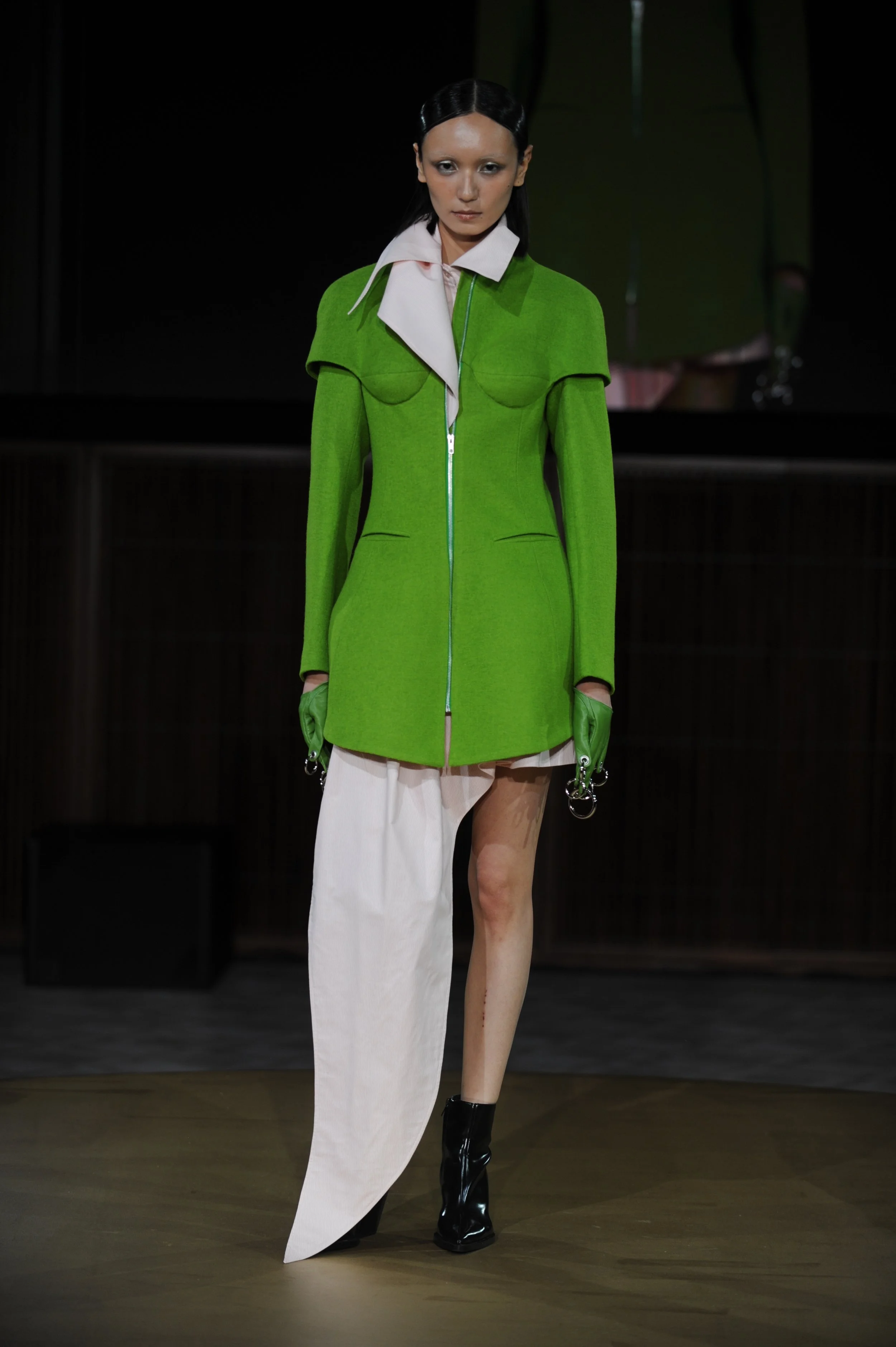
Lingle Zhao at London College of Fashion MA 2026. London Fashion Week. Photography by Roger Dean
Lingle Zhao's The Soft Warrior opened a conversation that several designers returned to throughout the show: softness not as absence, but as method. Rooted in the ritual of the shower as intimate sanctuary, Zhao's collection translated emotional vulnerability into garments that balance fluid drape with armour-inspired structure — the body, as she puts it, both held and shielded. Protection that isn't rigid, but tender.
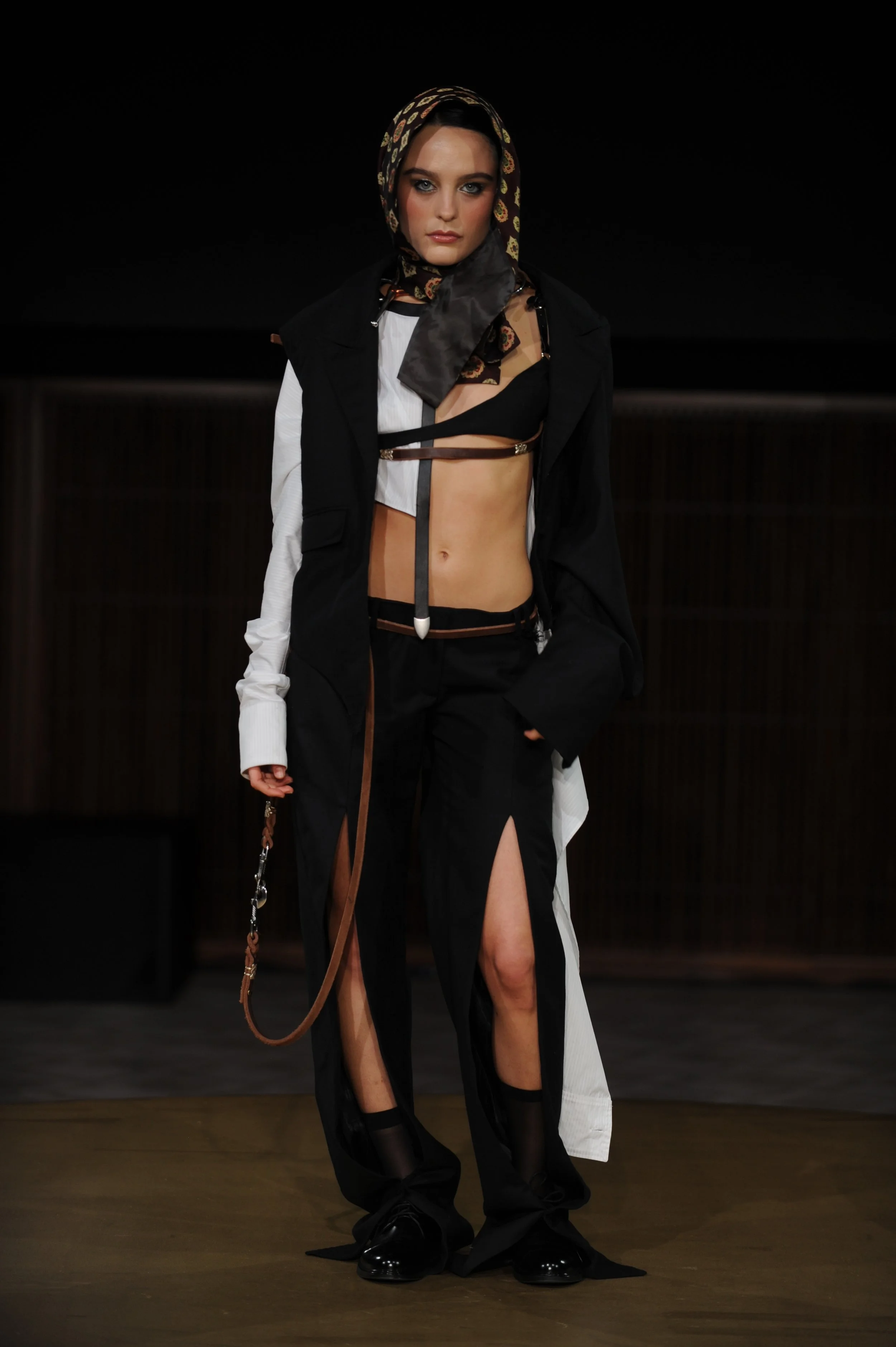
Shijia Liu at London College of Fashion MA 2026. London Fashion Week. Photography by Roger Dean
Shijia Liu took a different route to a similar question. Can an entire outfit be built as one piece? Each look peels away layer by layer like an onion, structurally connected throughout — clothing imagined as something infinite, informed by Chinese ink landscape hand scroll paintings and the aesthetics of Liubai. Liu's project discovers structural continuity as an internal system, framing fashion as something that connects, transforms, and unfolds.
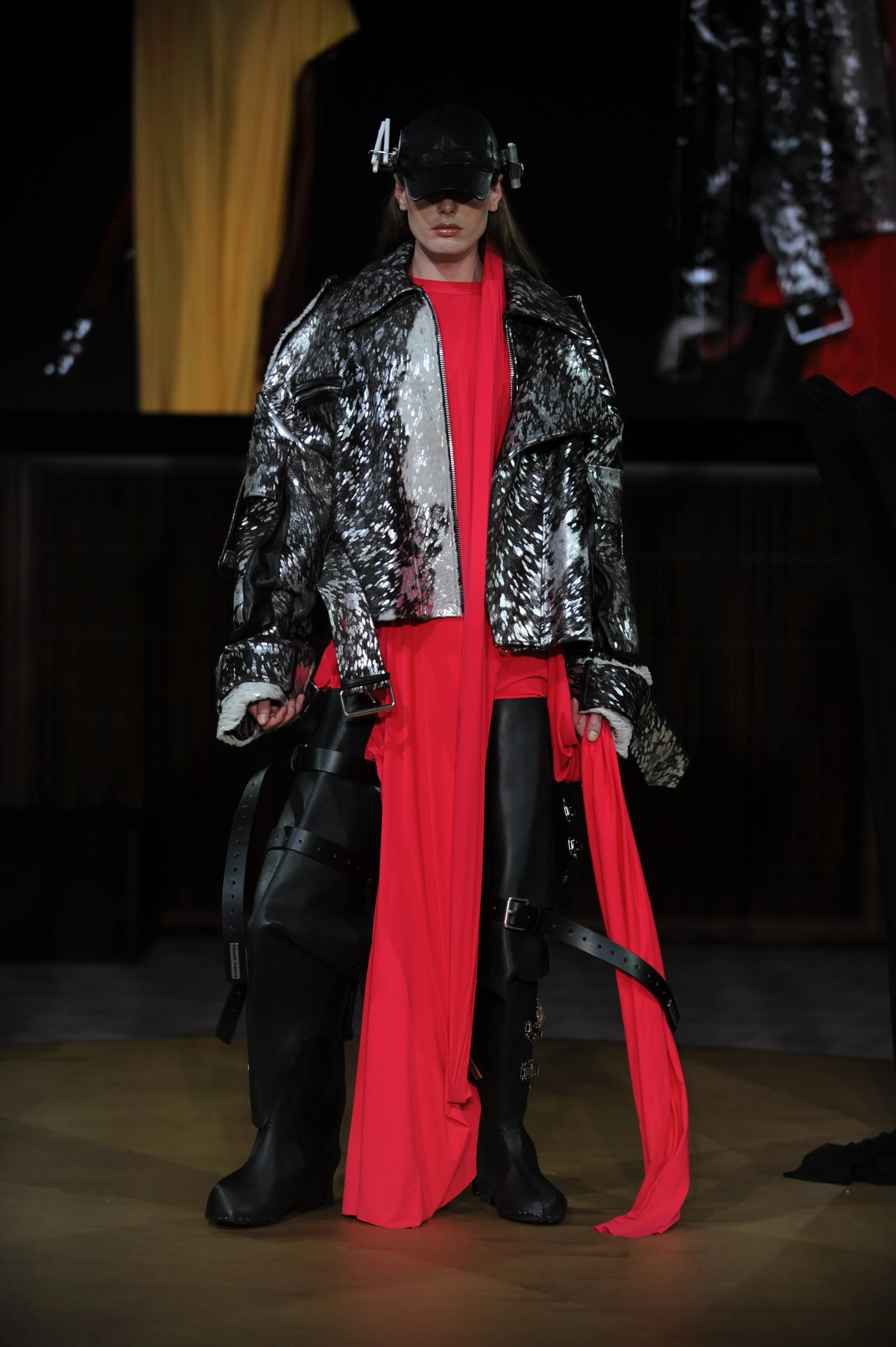
Tiger Peng at London College of Fashion MA 2026. London Fashion Week. Photography by Roger Dean
Tiger Peng's Private Ensemble was perhaps the most visceral on the schedule. Born from nights at East London techno club Fold, it traced the emotional arc of a night out — entry, dissolution, emergence — through fractured lights, queer bodies, and collective currents. A protective coat shields against the December cold; hibiscus pink ignites the body inside the club; yellow strobe fractures expanding shoulder blades. The collection ends outside, with visceral rain on heated skin and, as Peng writes, "the silver longing to go back." It is fashion made in embodied practice, held within private queer underground currents.
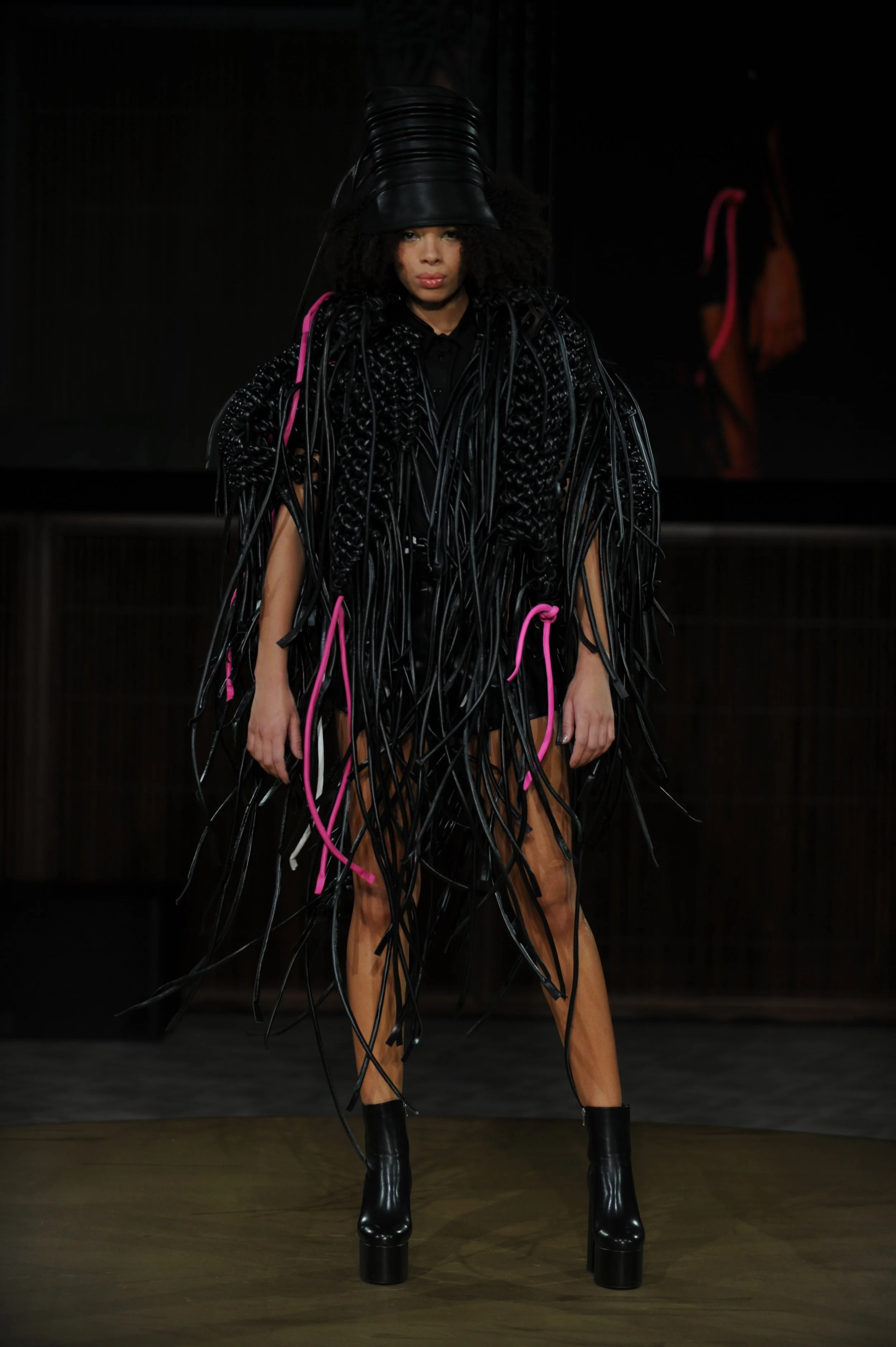
Karolina Kalisciak at London College of Fashion MA 2026. London Fashion Week. Photography by Roger Dean
Karolina Kalisciak brought something rooted in a very different kind of belonging. Her collection draws on her Polish heritage and the strength and femininity of the women in her family — reinterpreting Slavic craftsmanship through modern leatherwork. Every detail is handmade. A key piece: a jacket constructed from 500 metres of leather string, hand-knotted. It's a showcase of time, labour, and true leathercraft — bold, vivid, and unapologetically in-your-face.
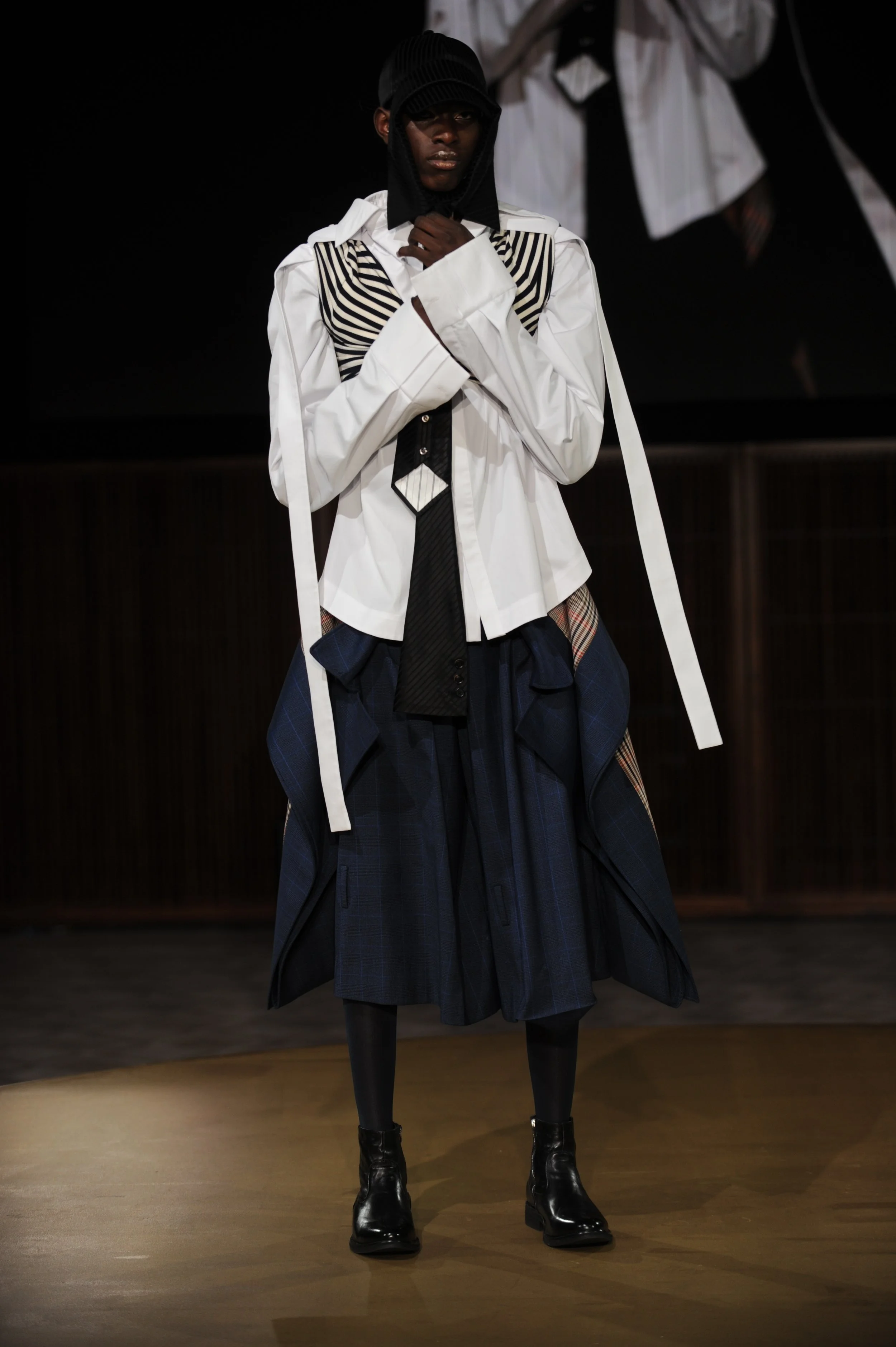
Yulu Hou at London College of Fashion MA 2026. London Fashion Week. Photography by Roger Dean
Yulu Hou turned her lens on systems rather than materials. Her project explores the hidden violence embedded within capitalist control — the way society worships productivity and discipline in a manner that mirrors religious devotion. Dressing becomes a quiet tool of power. The collection deconstructs corporate garments — suits, shirts, trousers — and combines them with the holiness, restriction, and ritual of the nun's habit. Designed for both men and women.
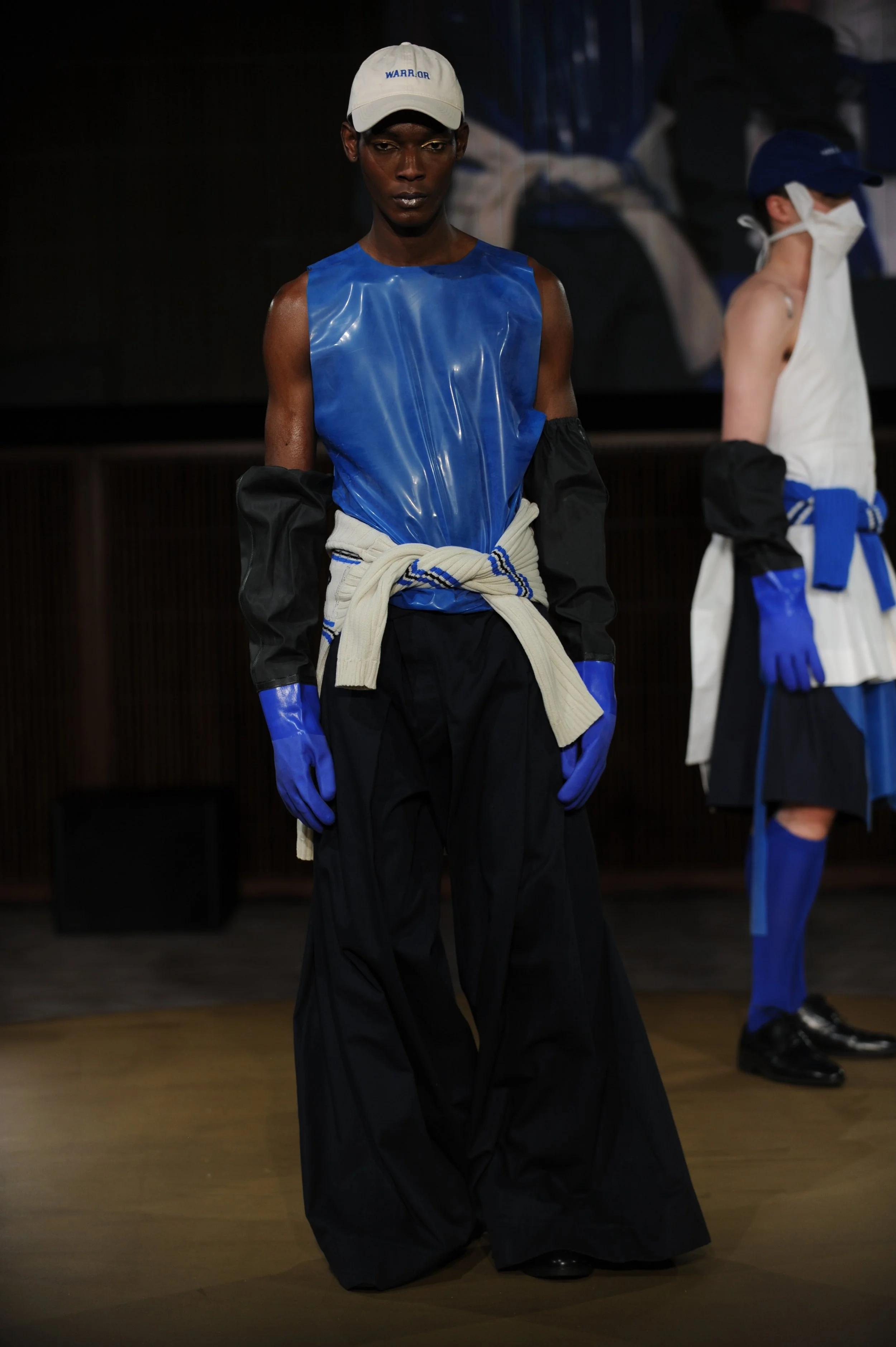
Geraint Brian Lewis at London College of Fashion MA 2026. London Fashion Week. Photography by Roger Dean
Geraint Brian Lewis's Reckoning was the collection that landed heaviest. Born from collapse, prolonged stillness, and survival, it holds the weight of childhood shadows and lived trauma, translated through clinical whites and deep familiar blues. Shirts cut from old bedsheets carry nights spent awake, resisting disappearance. Nothing is decorative. Every material is evidence. Pockets hold private truths. Hems trace the places where life is fractured and reformed. Welcome to Geraint's Reckoning.
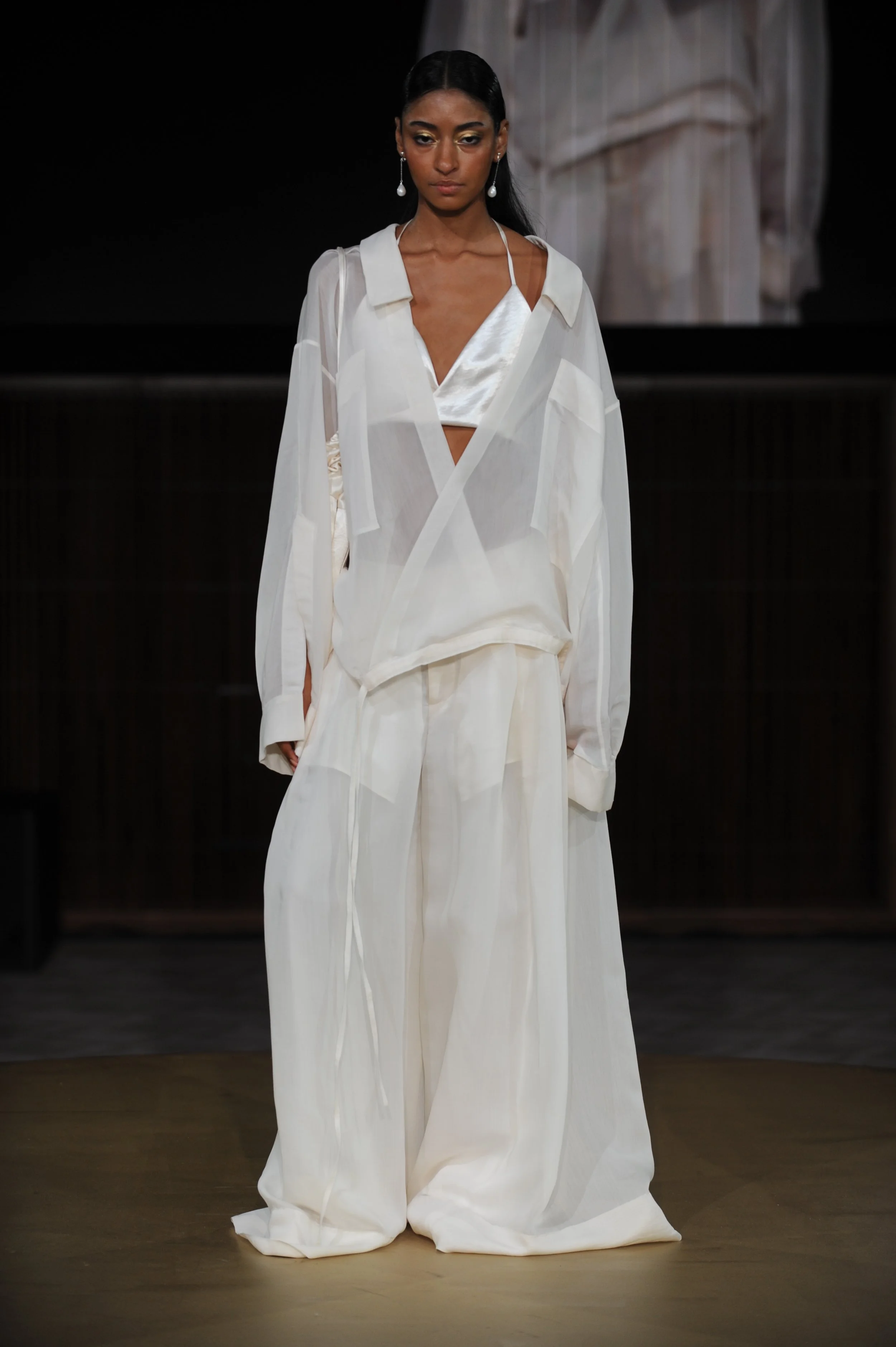
Yuting Zhou at London College of Fashion MA 2026. London Fashion Week. Photography by Roger Dean
Yuting Zhou worked with light, movement, and the quiet behaviour of fabric — using softness as a method, a way of letting form emerge through response rather than control. Transparency, layering, and motion create silhouettes that shift with the body. Strength appears not in structure, but in the way materials adapt with light, presence, and wear.
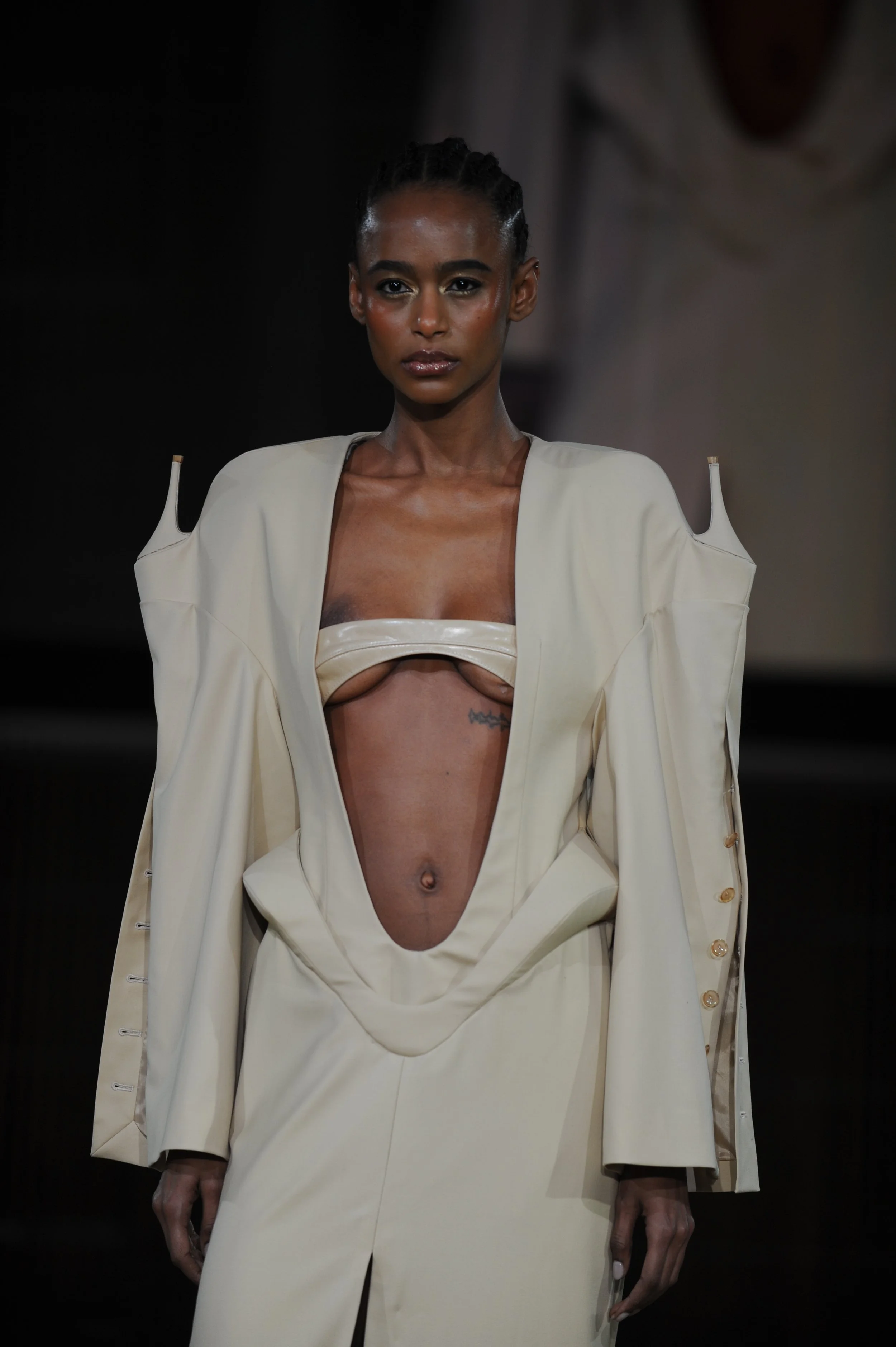
Jingxi Lei at London College of Fashion MA 2026. London Fashion Week. Photography by Roger Dean
Jingxi Lei arrived with a single, precise question: in what ways can the stiletto — as an absurd fashion object — be re-contextualised into clothing to interrogate fashion's own absurdity?
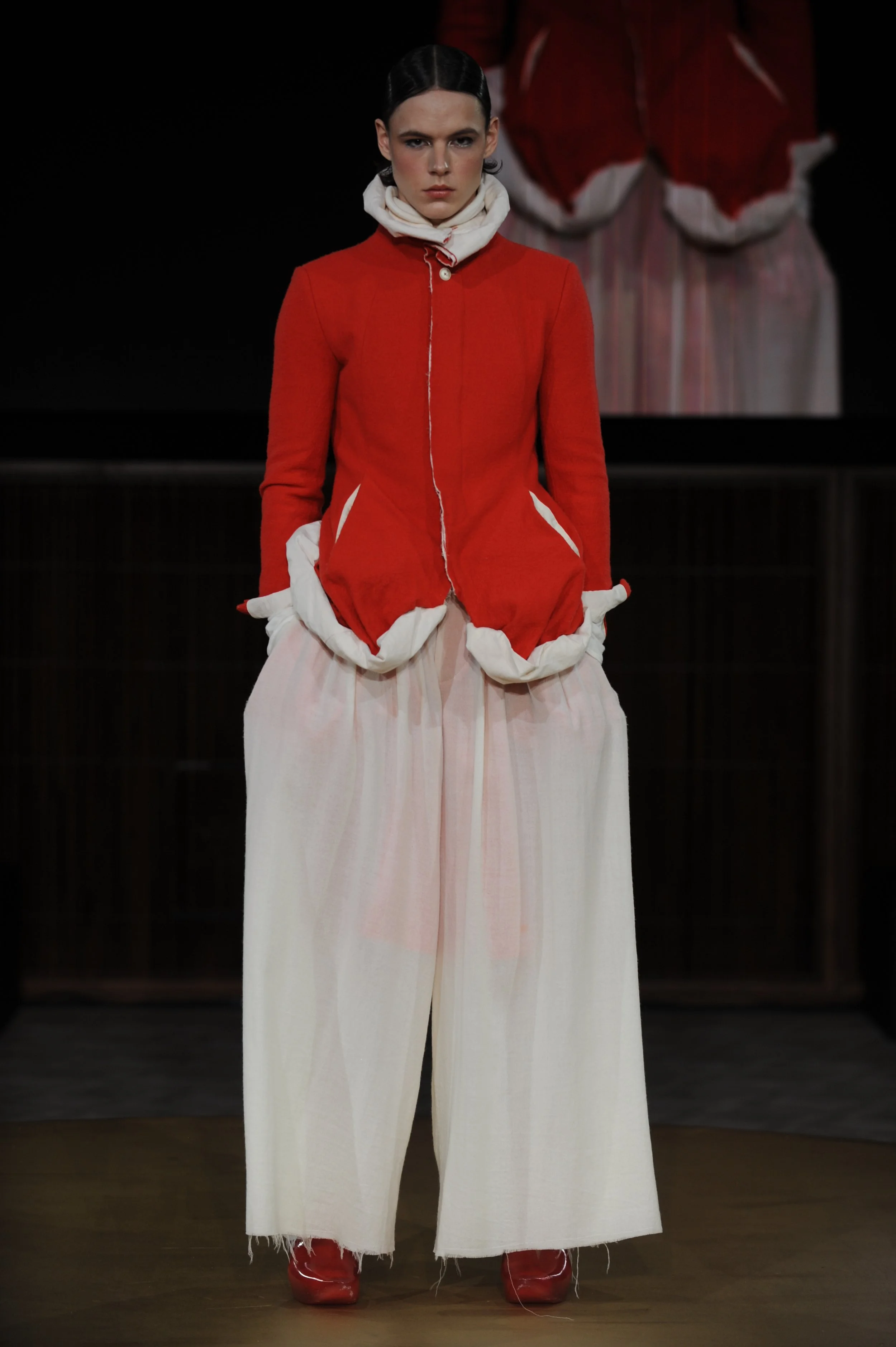
Qian Tan at London College of Fashion MA 2026. London Fashion Week. Photography by Roger Dean
Qian Tan opened the menswear conversation with something spiritual. His collection originates from an in-depth study of Ronchamp Chapel — the suspended structure, the mountain approach, the open quiet state of mind the building demands. Translating this into clothing, internal support is constructed with crisp cotton, allowing soft wool, knit, and velvet to settle around it as gently as air. The aim: a light, soothing wearing experience that offers a moment of genuine inner joy.
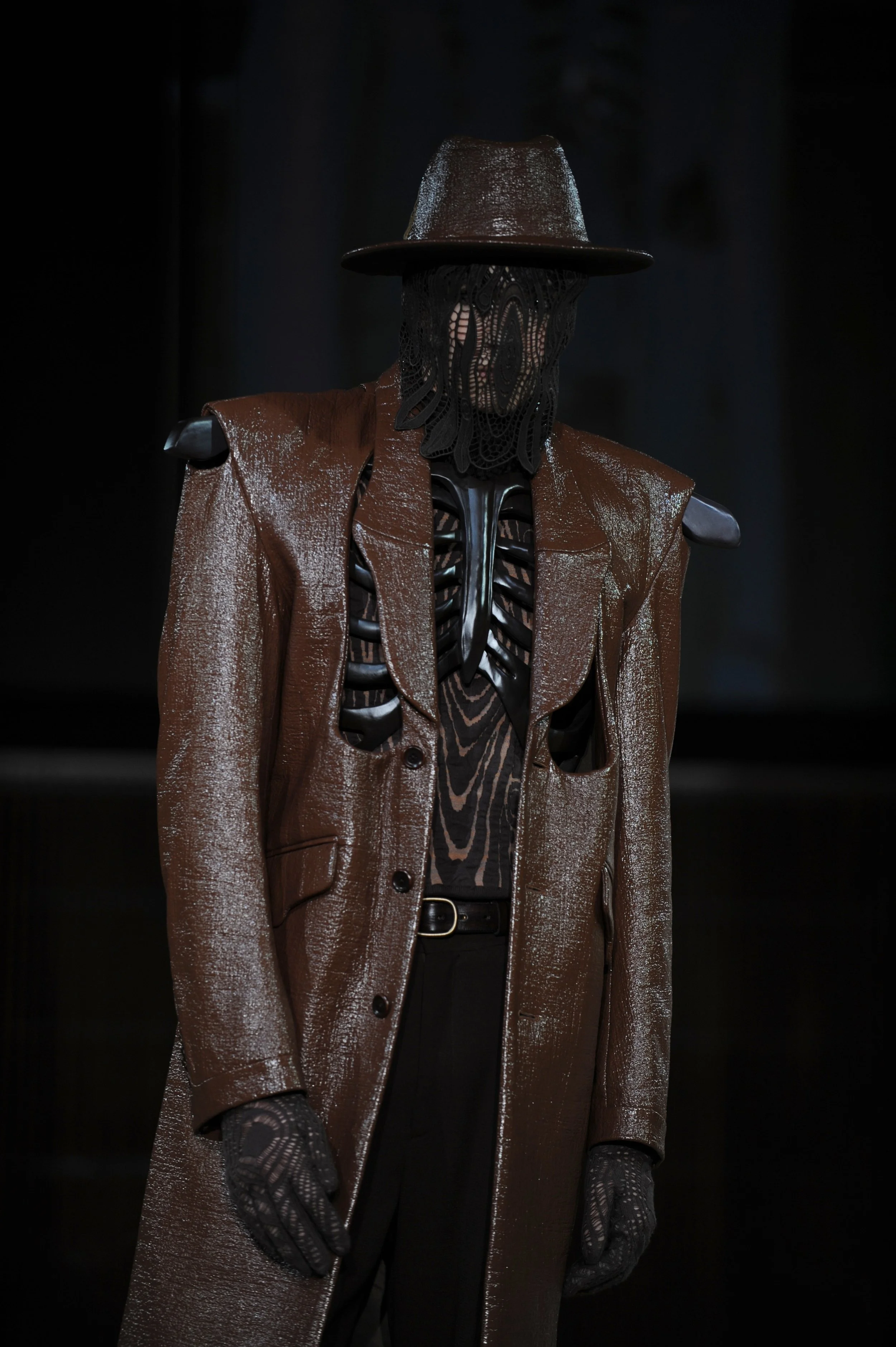
Jiyuan Fan at London College of Fashion MA 2026. London Fashion Week. Photography by Roger Dean
Jiyuan Fan's Human Hanger examined how structure shapes the body and identity. Starting from the everyday hanger, Fan transformed it into a visible system of support — skeleton and garment merged as one. Through tailoring, 3D printing, wood carving, and textile experimentation, the project redefines balance between rigidity and softness, proposing a new anatomy for contemporary menswear.
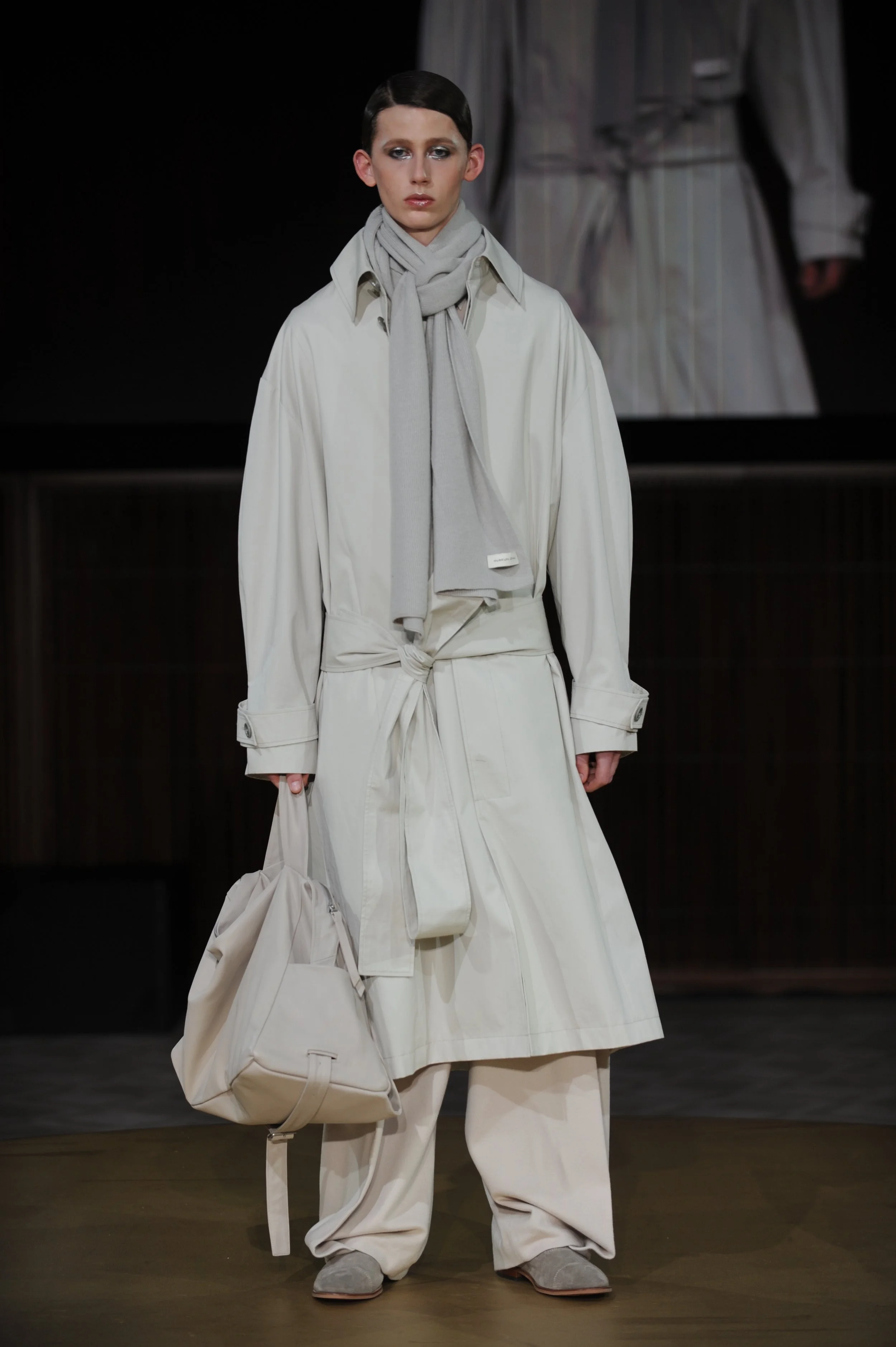
Huakan Zhu at London College of Fashion MA 2026. London Fashion Week. Photography by Roger Dean
Huakan Zhu interpreted the lovers' embrace through reverse folding. Layers intersect like bodies in a quiet hold, while knitted surfaces echo the warmth and softness of skin. Intimacy here is restrained yet present — not spoken, but held, pressed, and breathed into material.
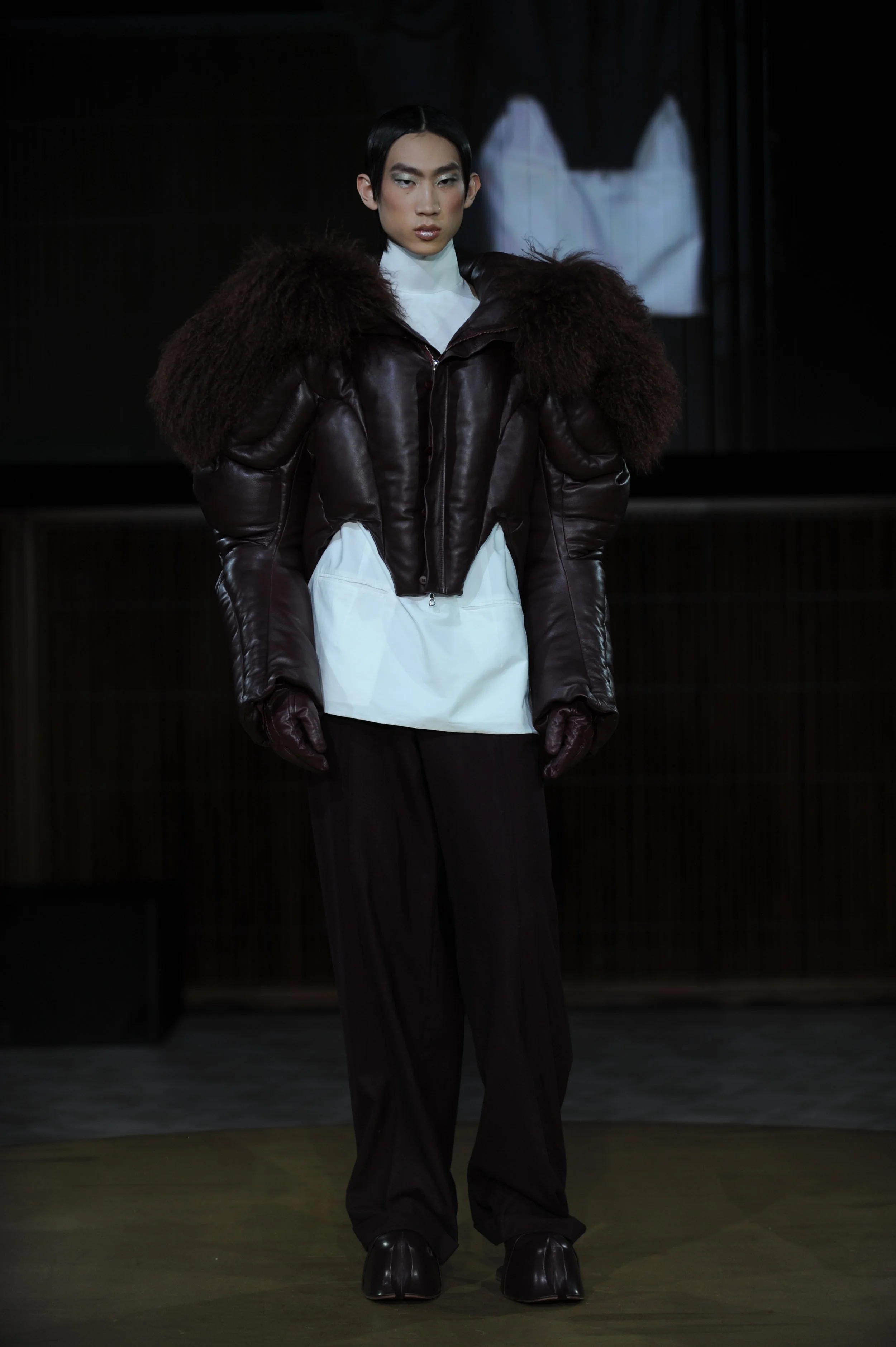
Kechen Yu at London College of Fashion MA 2026. London Fashion Week. Photography by Roger Dean
Kechen Yu's Butcher dissected the male body as a site of structure and fragility. Through sculptural pattern-cutting and layered padding, Yu's methodology translates the logic of butchery into tailoring — dividing, sectioning, and reassembling the body through curved darts, padding insertions, and layering to expose construction as anatomy.
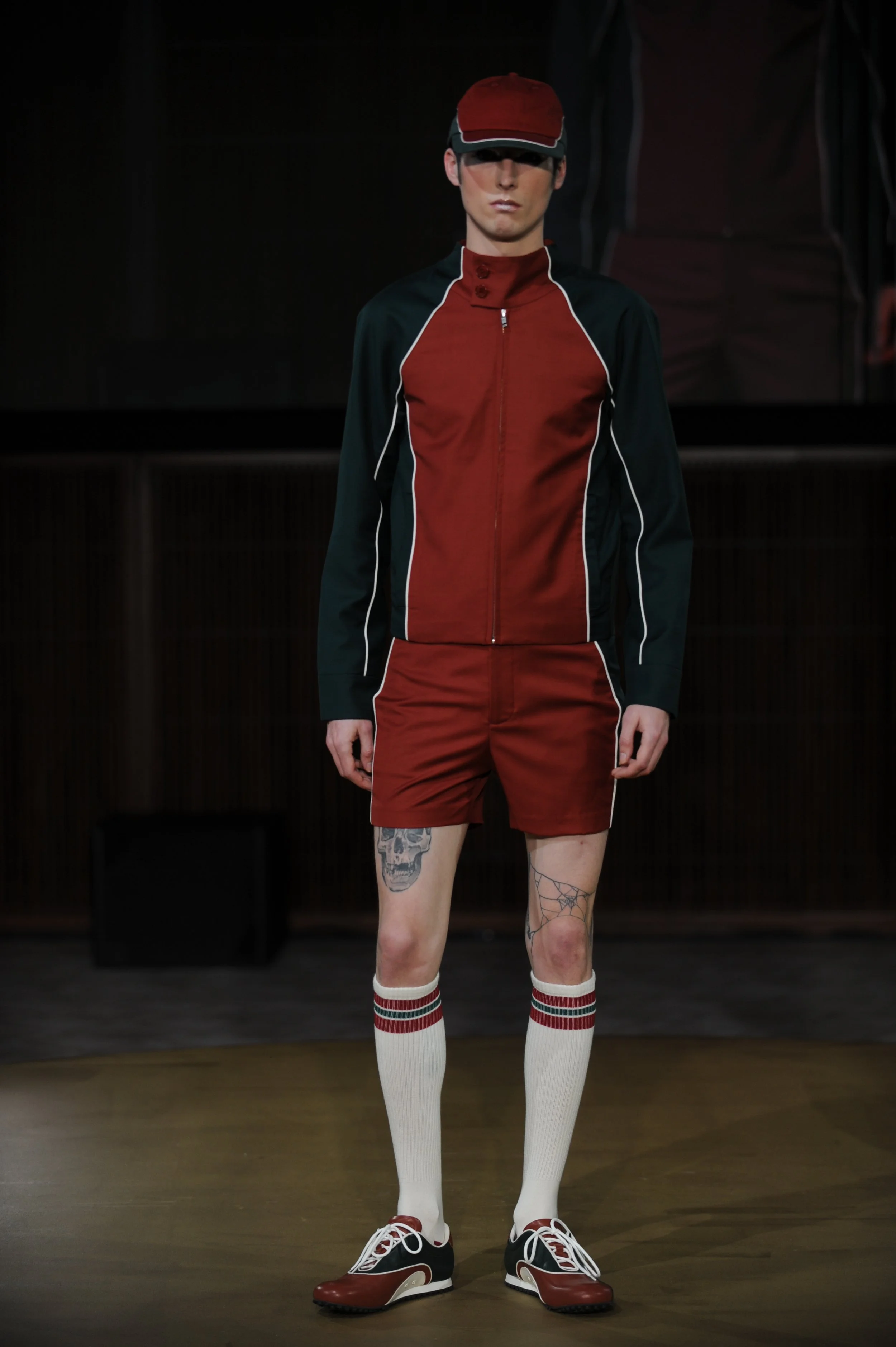
Xinhao Wang at London College of Fashion MA 2026. London Fashion Week. Photography by Roger Dean
Xinhao Wang's Rotation explored fashion's ability to adapt across multiple contexts while shaping a modern athletic male identity. Blending sportswear sensibility with classic tailoring, the collection proposes garments that move seamlessly from performance to everyday life — stretch fits with highlighted lines replacing traditional dart logic, elastic panels and tailored foundations working together to enhance posture, strength, and ease.
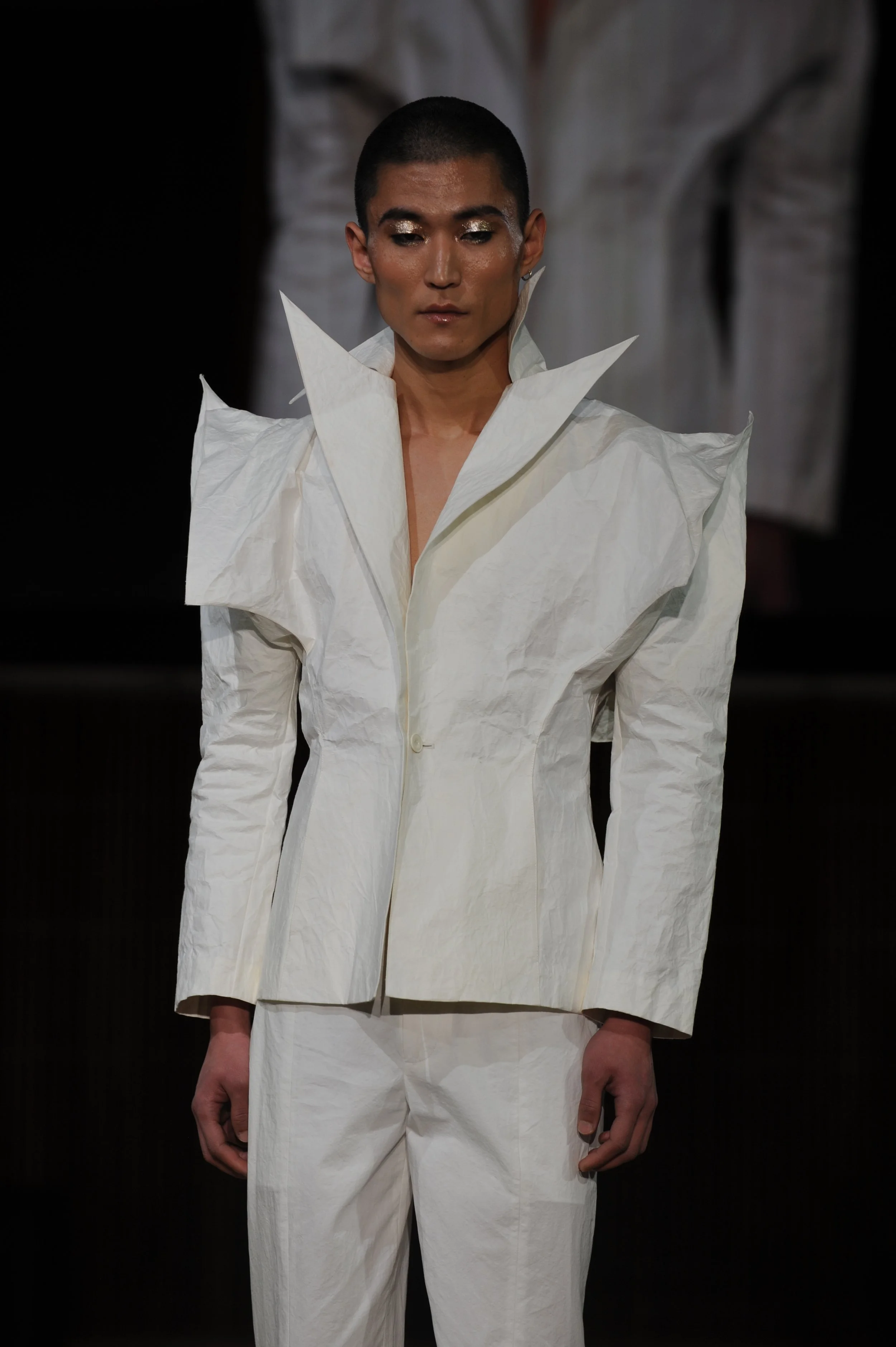
Zeting Xu at London College of Fashion MA 2026. London Fashion Week. Photography by Roger Dean
Zeting Xu investigated how serif typographic morphology can be translated into menswear through pattern cutting — treating patterns as typographic strokes, examining how curvature and terminal points of serif shape silhouette on the male body. Paper-like textiles and pine soot ink on washable paper recall the matte, fibrous tactility of Gambiered Cantonese Silk, establishing a dialogue in which ink and paper function as interdependent agents of form and surface.
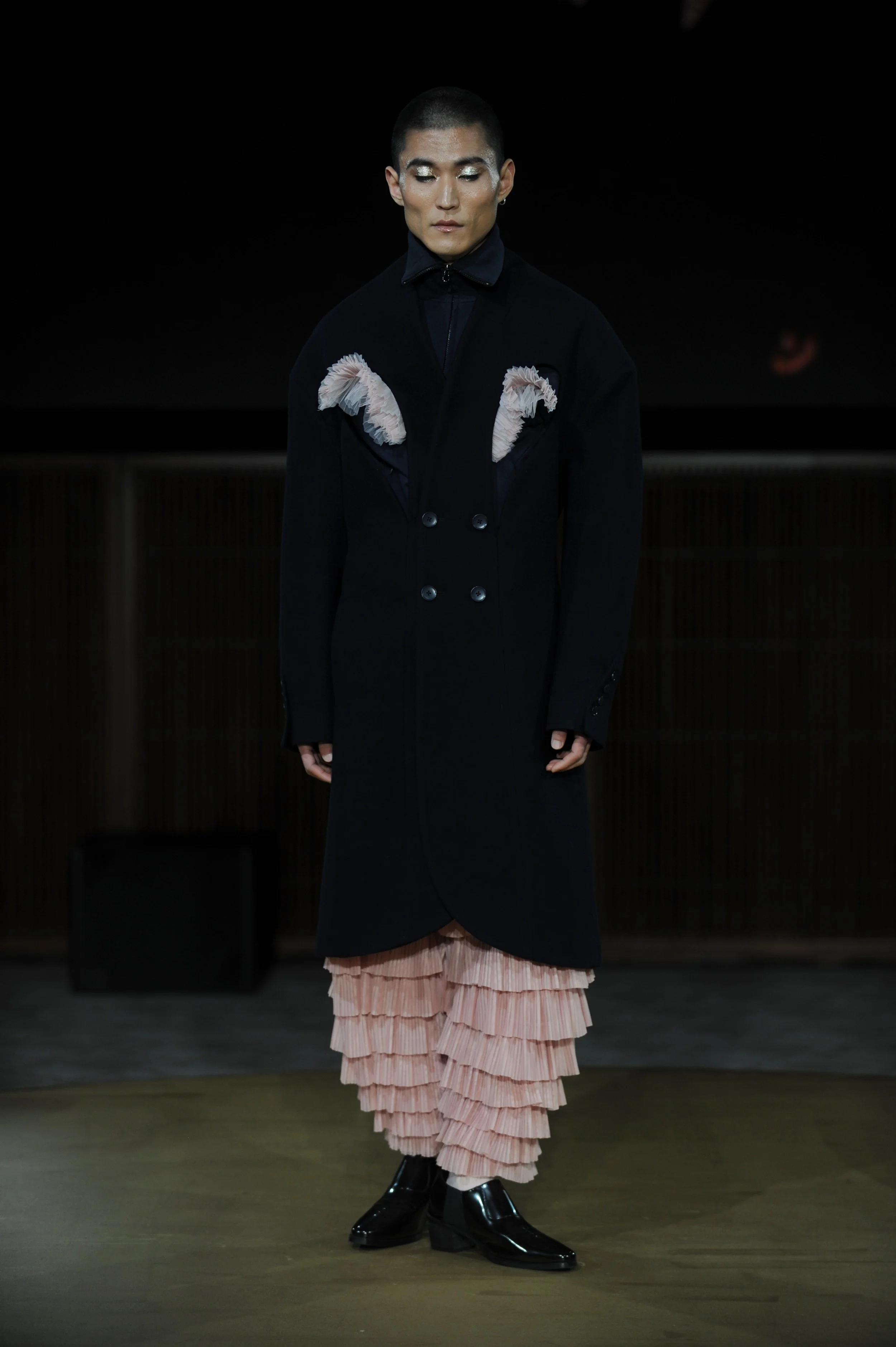
Ziying Liang at London College of Fashion MA 2026. London Fashion Week. Photography by Roger Dean
Ziying Liang closed the menswear programme with a collection developed from a male perspective of longing for the female body — examining how feminine body curves are deconstructed and translated onto the male form. Engaging with the film The Danish Girl, the tutu skirt becomes the feminine foundation of the collection, its curved silhouette exposed through sculptural cut-outs on menswear garments, revealing softness and vulnerability beneath the masculine structure. A strong visual challenge to traditional boundaries between gender, body, and identity.
The exhibition at East Bank runs until 24 February and is free to attend — no booking required.